The Day Begins Before the Wedding Does
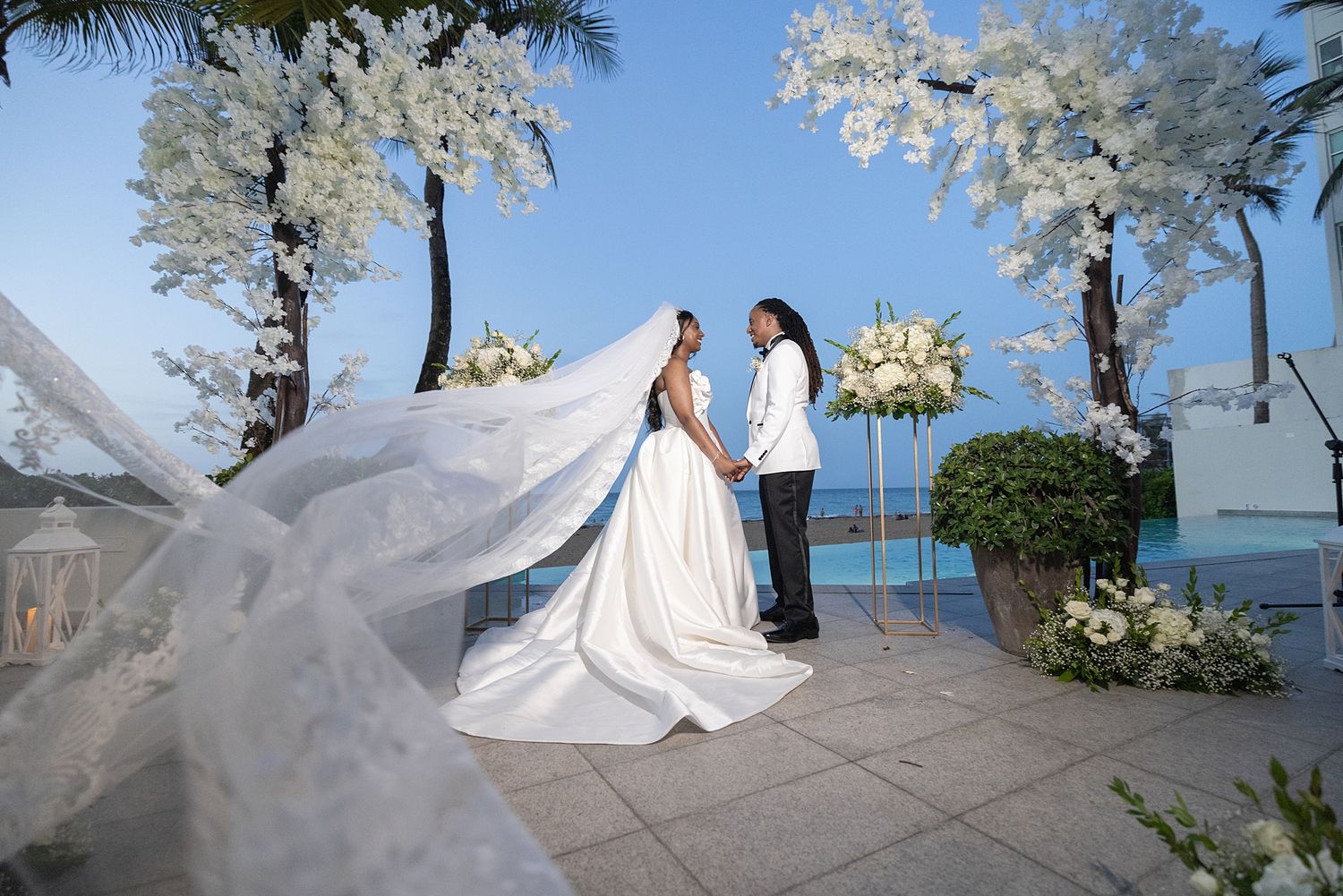
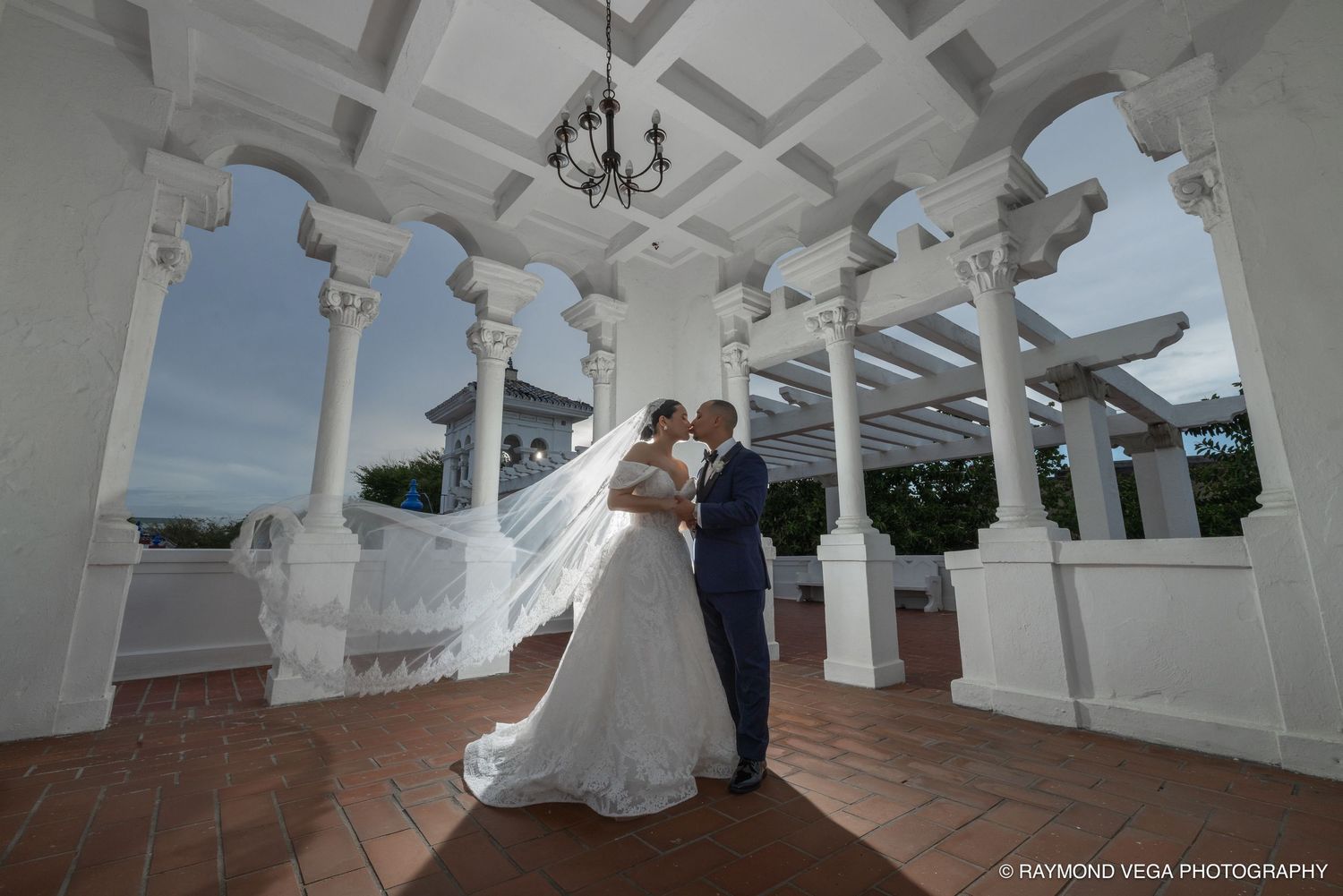
We arrived at Hacienda Siesta Alegre three to four hours before the first guest. Not to set up — to create.
Those early hours are some of the most important of the entire production. With the hacienda quiet and the light still soft, we capture the opening sequences — the aerial shots that establish the location, the cinematic establishing frames that tell the viewer where we are before we tell them what happens here. Our drone operator works the sky while the rest of the team walks the property, studying the light, mapping the ceremony space, confirming sightlines, reviewing the timeline.
By the time the wedding begins, we've already been working for hours. We know exactly where to be and when.
Twelve Hours of Production
From arrival to departure, this was a twelve-hour production day. We finished close to ten o'clock at night.
That's not unusual for us. A wedding day is not a single event — it's a series of overlapping moments happening simultaneously across multiple spaces. Getting ready. Ceremony preparations. The procession. The vows. The first kiss. Cocktail hour. Introductions. First dance. Toasts. Dinner. Dancing. The quiet moments between the loud ones.
Every one of those moments matters. Our job is to make sure none of them disappear.
Two Cameras. One Story.
We always work with a minimum of two cameras — and there's a specific reason for that.
One camera covers the primary action. The other one is always looking somewhere else.
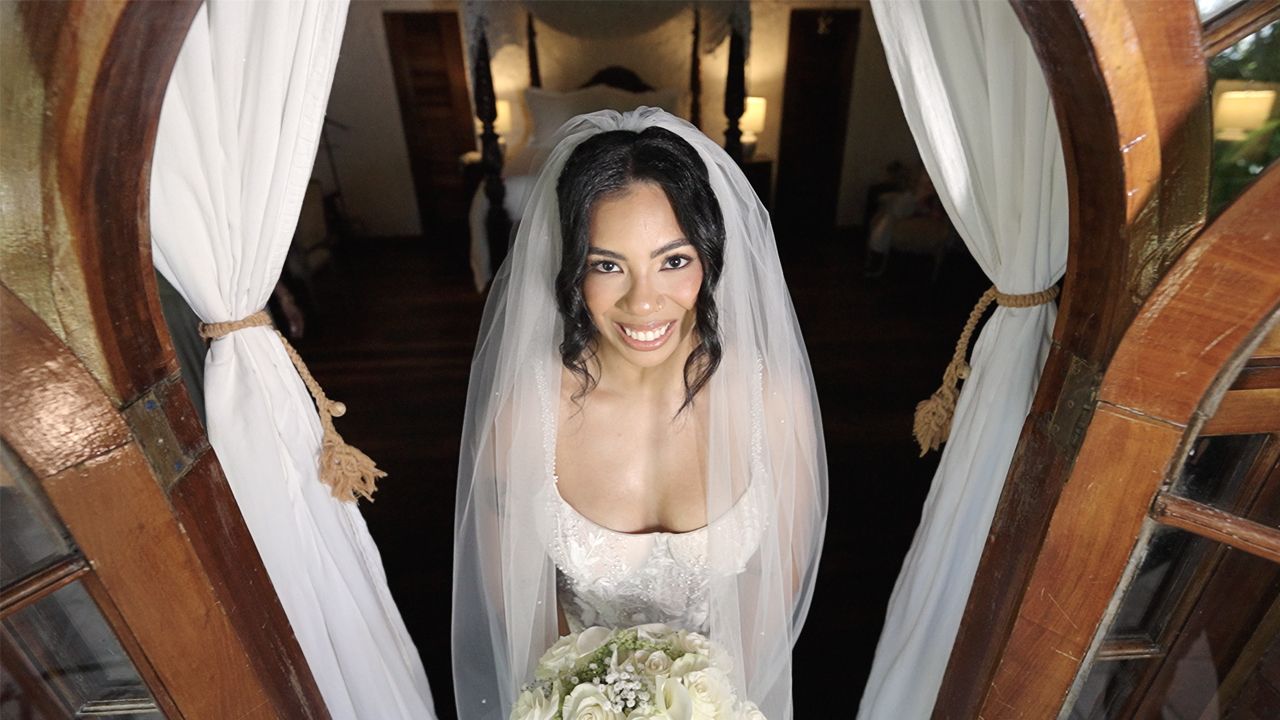
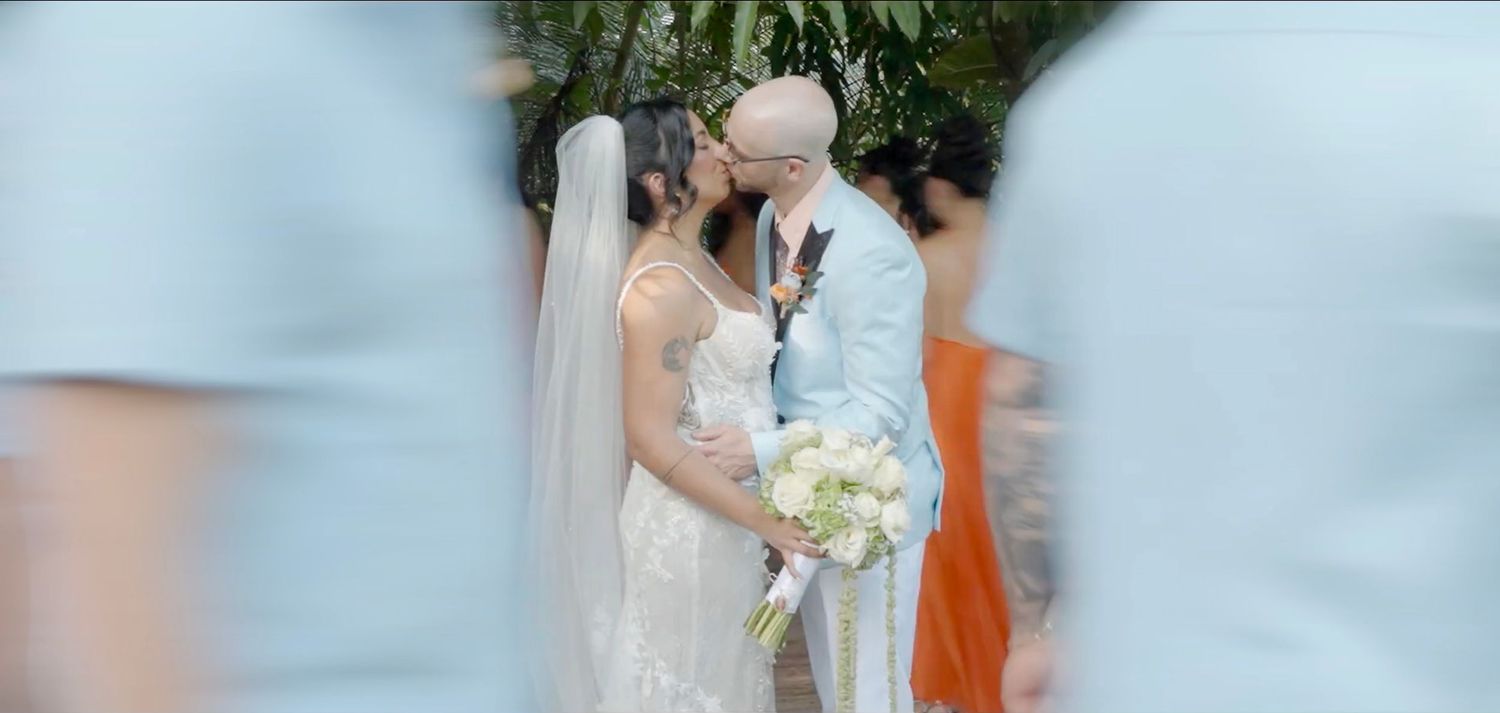
When the first camera captures the bride walking down the aisle, the second camera is already on the groom — reading his face, catching the exact moment he sees her for the first time. When the first camera holds on the couple during the vows, the second is moving through the guests, finding the mother wiping her eyes, the best friend laughing through tears, the grandmother who's been waiting thirty years for this moment.
Two cameras don't just give you more footage. They give you a story with depth — an experience that feels like a film, not a recording. The edit becomes a conversation between two perspectives rather than a single point of view. That's the difference between watching a wedding and reliving one.
Audio Is the Other Half
Couples focus on the visual — and they should, because the images are extraordinary. But in our production, audio carries equal weight.
We connect multiple independent audio sources at every key moment. Lavalier microphones on the officiant. Recording devices near the couple. Ambient capture throughout the venue. Every layer of sound is recorded separately and combined in post-production to create an audio experience that is clean, full, and emotionally present.
The reason this matters: the vows.
The words a couple says to each other on their wedding day are the most personal, unrepeatable thing that happens. They are a promise made in front of everyone they love. Years from now, when they watch their film, they will hear those words again — in the same voice, with the same emotion, with the same weight they carried that day.
Bad audio takes you out of that moment. Good audio puts you back in it completely.
We take audio as seriously as any image we capture.
Hacienda Siesta Alegre — What This Location Demands
Hacienda Siesta Alegre sits at the edge of El Yunque Rainforest. That proximity is part of what makes it extraordinary — and part of what makes it demanding.
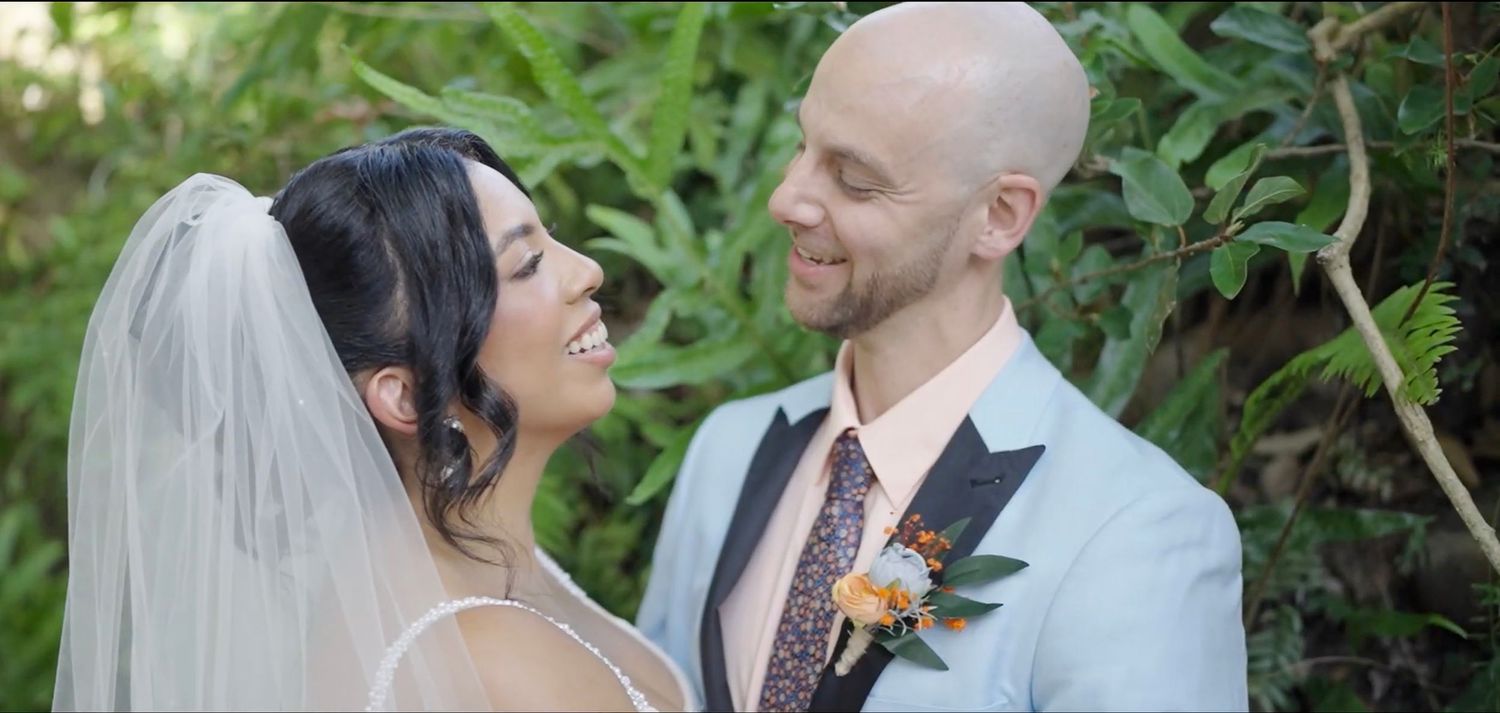
The humidity that day was high. That means equipment has to be managed carefully, team members have to stay alert and hydrated, and the light — which filters through dense tropical canopy in ways that are genuinely beautiful — changes constantly. A frame that was perfect twenty minutes ago looks different now. You adapt.
Heat and humidity make the physical work harder. Twelve hours of production without stopping, moving through the property with camera equipment, stabilizers, and audio gear — it takes conditioning and discipline. Our team never stops because the day never stops. Every moment we miss is a moment that doesn't exist in the final film.
That awareness drives everything we do.
Stabilizers and the Language of Cinema
Wedding photography can be still. Wedding cinematography is always moving — and how it moves matters as much as what it captures.
We use professional camera stabilizers throughout the production to achieve movement that feels intentional rather than accidental. A handheld camera that bounces and shakes tells the viewer they're watching someone record a video. A stabilized camera that glides through a space, that approaches a moment slowly, that circles a couple during their first dance — that tells a different story. It says: this is a film.
The technical vocabulary of cinema — the push in, the tracking shot, the slow rise — is part of how we communicate emotion. Slow camera movements during the vows create a sense of gravity. Faster movement during dancing creates energy. The camera isn't just recording; it's feeling.
The Script We Write Before the Day
Before every wedding, we create a production guide — a detailed breakdown of the day's timeline, the key moments we must capture, the creative sequences we plan to execute, and the logistics of how the team will move and coordinate.
This isn't a rigid script — a wedding day is too alive for that. But it's a framework that allows us to be spontaneous with confidence. When you know what you're responsible for, you can make decisions in real time without hesitation. When something unexpected happens — and something always does — you adapt without losing the thread.
Experience is what makes that possible. After more than twenty-five years of production, the unexpected is simply part of the process.
When the Wedding Ends, the Work Is Thirty Percent Done
Most people think the film is almost finished when the wedding day is over.
It isn't. The wedding day is thirty percent of the total production.
When we return to the studio, the first thing we do is back everything up — three separate backups in three different locations. This is not optional. It's not a preference. It's a professional obligation to the couple who trusted us with something that can never be recreated.
Once the footage is secured and organized, the editing process begins immediately. Every clip from every camera is reviewed. The independent audio tracks are synced and layered. The footage is organized by moment — preparation, ceremony, portraits, reception — and the work of building the story begins.
For this production, that process took four weeks from wedding day to delivery.
The Music
The music in a wedding film is not selected from a playlist. It's chosen — or in many cases created — specifically for the couple.
How a couple moves through their wedding day tells you everything about the kind of music that belongs in their film. A couple with explosive energy, who dance with abandon and fill every room with laughter, needs music that matches that electricity. A couple who are quieter, more tender — who hold each other during the ceremony with their eyes closed — needs something that breathes differently.
In every production, we look for both. There's usually a romantic thread running through a wedding day — quiet moments, private glances, slow dances — and there's also joy, movement, celebration. The music has to hold all of it.
Our goal is always the same: when the couple watches their film, the music should feel like it was written specifically for them. Because in the way that matters most — it was.
The Delivery
When the film is complete, we don't simply send a file.
We transfer the finished production to a private, dedicated cloud — a secure space that belongs to the couple. And then, with genuine excitement, we let them know: their film is ready.
The full film and the cinematic trailer — a highlight version that captures the emotional arc of the day in a shorter form — are both delivered at the same time.
That moment of delivery is one of the most meaningful parts of this work. Knowing that somewhere, a couple is sitting down to watch their wedding day for the first time — not as they remember it, but as it actually was — is something that never gets smaller no matter how many times we experience it.
What We Want You to Feel
When you watch this film — when you watch any film we create — we want one thing.
We want you to feel it again.
Not to remember it. Not to think about it. To feel it — the way you felt it when you were standing there, in that space, on that day, with that person.
Your children will watch this film and understand something about your love that words could never fully explain. Your parents will see themselves in the background of a moment they thought had passed. And you — years from now — will press play and be twenty minutes younger, standing at the edge of everything that came after.
That is what a wedding film is. That is what we build.
Raymond Vega is a luxury wedding photographer and cinematographer based in Puerto Rico, with over 25 years of experience creating wedding films for couples from across the United States and beyond. His team of professionals brings dedicated cinematography, FAA-certified drone coverage, and multi-camera production to every wedding they document.
There are photographers who capture moments. Raymond Vega documents legacies. If you're ready to talk about your wedding film, visit raymondvega.com.
Follow me on Instagram
@RAYMONDPHOTO


RAYMOND VEGA PHOTOGRAPHY+ CINEMATOGRAPHY